
Liquid Cooled Container
Liquid Cooled Battery Energy Storage Systems
In the ever-evolving landscape of battery energy storage systems, the quest for efficiency, reliability, and longevity has led to the development of more innovative technologies. One such advancement is the liquid-cooled energy storage battery system, which offers a range of technical benefits compared to traditional air-cooled systems. Much like the transition from air cooled engines to liquid cooled in the 1980’s, battery energy storage systems are now moving towards this same technological heat management add-on. Below we will delve into the technical intricacies of liquid-cooled energy storage battery systems and explore their advantages over their air-cooled counterparts.
Basics of Liquid Cooling
Liquid cooling is a technique that involves circulating a coolant, usually a mixture of water and glycol, through a system to dissipate heat generated during the operation of batteries. This is in stark contrast to air-cooled systems, which rely on the ambient and internally (within an enclosure) modified air to cool the battery cells.
Benefits of Liquid Cooled Battery Energy Storage Systems
Enhanced Thermal Management
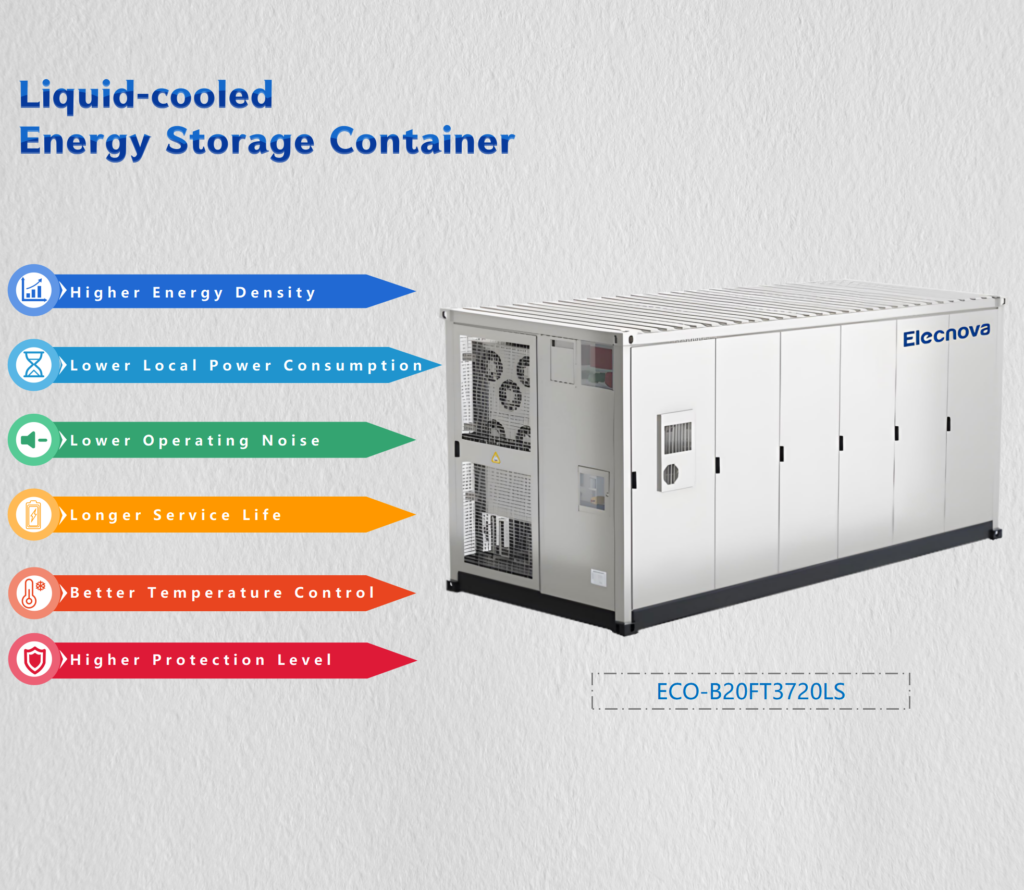
Liquid cooling provides superior thermal management capabilities compared to air cooling. It enables precise control over the temperature of battery cells, ensuring that they operate within an optimal temperature range.
Higher Energy Density:
Liquid cooling allows for a more compact design and better integration of battery cells. As a result, liquid-cooled energy storage systems often have higher energy density compared to their air-cooled counterparts.
Improved Safety
Efficient thermal management plays a pivotal role in ensuring the safety of energy storage systems. Liquid cooling helps prevent hot spots and minimizes the risk of thermal runaway, a phenomenon that could lead to catastrophic failure in battery cells.
Consistent Performance
Liquid cooling contributes to maintaining a stable and consistent temperature across all battery cells. This uniform thermal environment translates into more reliable and predictable performance, allowing for better control over the charging and discharging processes.
Extended Battery Life
By mitigating the impact of heat on battery cells, liquid cooling contributes to extending the overall lifespan of the energy storage system. Prolonged battery life is a significant factor in reducing the total cost of ownership and improving the economic viability of energy storage solutions.
Flexible Installation
Liquid-cooled systems offer greater flexibility in terms of installation, as they are not as dependent on external air circulation.
Liquid Cooled Battery Energy Storage System Container
Temperature Regulation for Optimal Performance
Maintaining an optimal operating temperature is paramount for battery performance. Liquid-cooled systems provide precise temperature control, allowing for the fine-tuning of thermal conditions. This level of control ensures that the batteries operate in conditions that maximize their efficiency, charge-discharge rates, and overall performance.
Integration with Renewable Energy Sources
Liquid-cooled energy storage systems are particularly advantageous in conjunction with renewable energy sources, such as solar and wind. The ability to efficiently manage temperature fluctuations ensures that the batteries seamlessly integrate with the intermittent nature of these renewable sources.
Scalability and Modular Design
Liquid cooling facilitates a more scalable and modular design for energy storage systems. The ability to efficiently cool individual battery cells enables the creation of modular units that can be easily combined to scale up the storage capacity. This scalability is essential for adapting energy storage solutions
Environmental Considerations
While the environmental impact of any technology is a critical consideration, liquid-cooled systems can be designed with sustainability in mind. Closed-loop systems can be implemented to minimize water usage, and environmentally friendly coolant options are available.
Challenges and Future Developments
Despite the numerous advantages, liquid-cooled energy storage systems are not without challenges. Implementation costs, maintenance complexities, and the need for specialized expertise are factors that need to be carefully addressed.