
Battery energy storage systems (BESS)
Flexible, scalable design for efficient energy storage.
Energy storage is critical to decarbonizing the power system and reducing greenhouse gas emissions. It’s also essential to build resilient, reliable, and affordable electricity grids that can handle the variable nature of renewable energy sources like wind and solar. There are different energy storage solutions available today, but lithium-ion batteries are currently the technology of choice due to their cost-effectiveness and high efficiency.
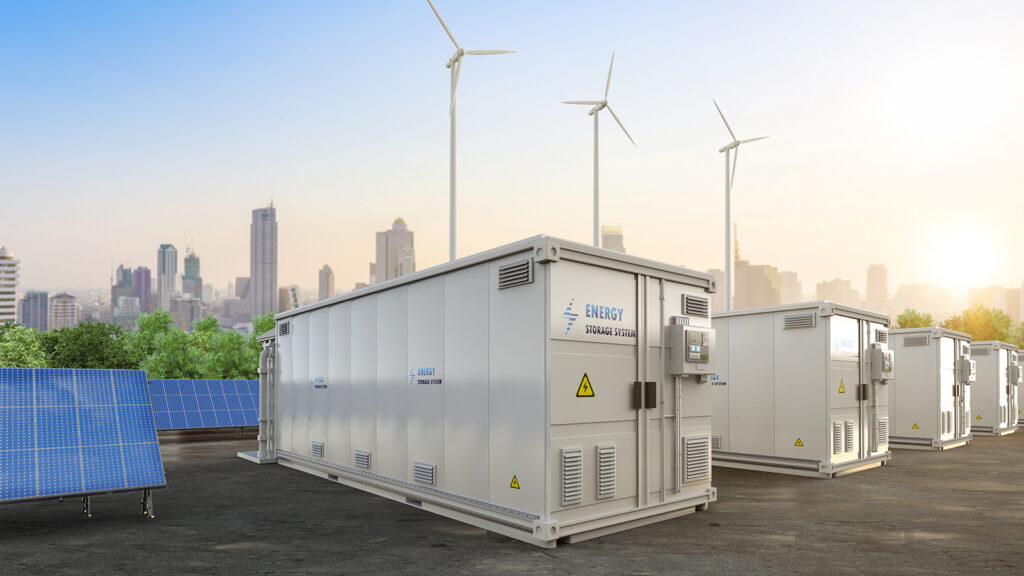
Battery Energy Storage Systems, or BESS, are rechargeable batteries that can store energy from different sources and discharge it when needed. BESS consist of one or more batteries and can be used to balance the electric grid, provide backup power and improve grid stability.
How will BESS improve your systems?
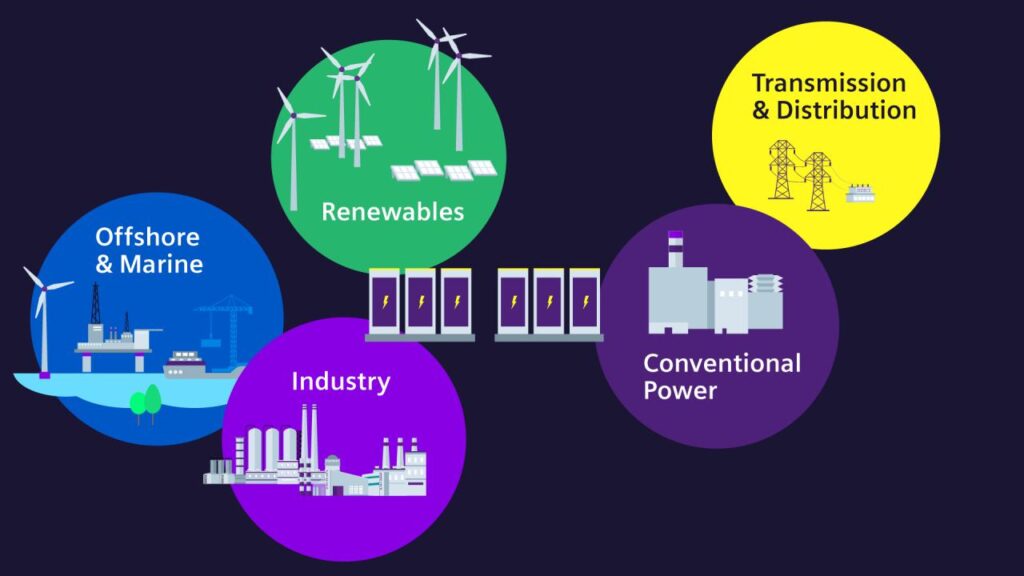
From renewable energy producers, conventional thermal power plant operators and grid operators to industrial electricity consumers, and offshore drilling platforms or vessels, BESS offer highly efficient and cost-effective energy storage solutions.
With BESS, you can even generate new revenue streams as it allows energy arbitrage or directly reduce your electricity bill via peak shaving.

How do storage plants work?
The technology for BESS is based on the use of electrochemical storage, which can store the energy produced by renewable power plants. It’s a kind of power bank that can give back stored energy, by returning it on demand.
BESS are one of the main energy storage system: sometimes they are also called electrochemical energy systems to distinguish them from others, such as gravitational energy systems (including pumped-storage hydroelectric power plants), mechanical energy systems (including compressed air or flywheel systems) and (Thermal Energy Storage, TES) systems
As in all storage systems, in the case of BESS the electricity produced by a power plant, or any other generating plant (even a single photovoltaic panel), is stored and then released at the desired times and moments. BESS uses a specific technique for storage: since an electric current is a flow of electrical charges, a battery is charged by accumulating charges of particular materials (called electrolytes) at one of the two poles, from which they then flow to the other pole in the discharge phase.
Where is battery energy storage used?
Renewables
Battery energy storage aligns solar and wind generation peaks with demand peaks.
Residential and Commercial
lower energy costs, improves load factor, and manages demand peaks.
Utility distribution grid
balances fluctuating demand at peak hours while reducing grid overload.
Industrial loads
provides backup power for critical loads, improves load factor, and manages demand peaks.
Find your best-fit battery storage solution
Battery energy storage systems (BESS) from Siemens Energy are comprehensive and proven. Battery units, PCS skids, and battery management system software are all part of our BESS solutions, ensuring maximum efficiency and safety for each customer. You can count on us for parts, maintenance services, and remote operation support as your reliable service partner.
Currently, Siemens Energy offers BlueVault™ Storage solution for the marine and offshore market and SIESTART for utilities and T&D network operators. For industrial deployment, we offer a customized battery storage solution to meet your unique business needs.
We’ll be there for you – all around your storage
We provide the optimized solutions for your applications with innovative, proven BESS technology including inhouse components. Siemens Energy offers services for any customer requirement regarding your power quality, including design studies, financing support, project management, assembly and commissioning, as well as after-sales services. Siemens Energy will be your experienced partner in all stages of the project. Trust on us, even before you know which solution you need – we’ll assist you based on strong experience. To guarantee an optimal customer experience, we use our BESS integration center to continuously test and improve our solutions, products and offerings.
